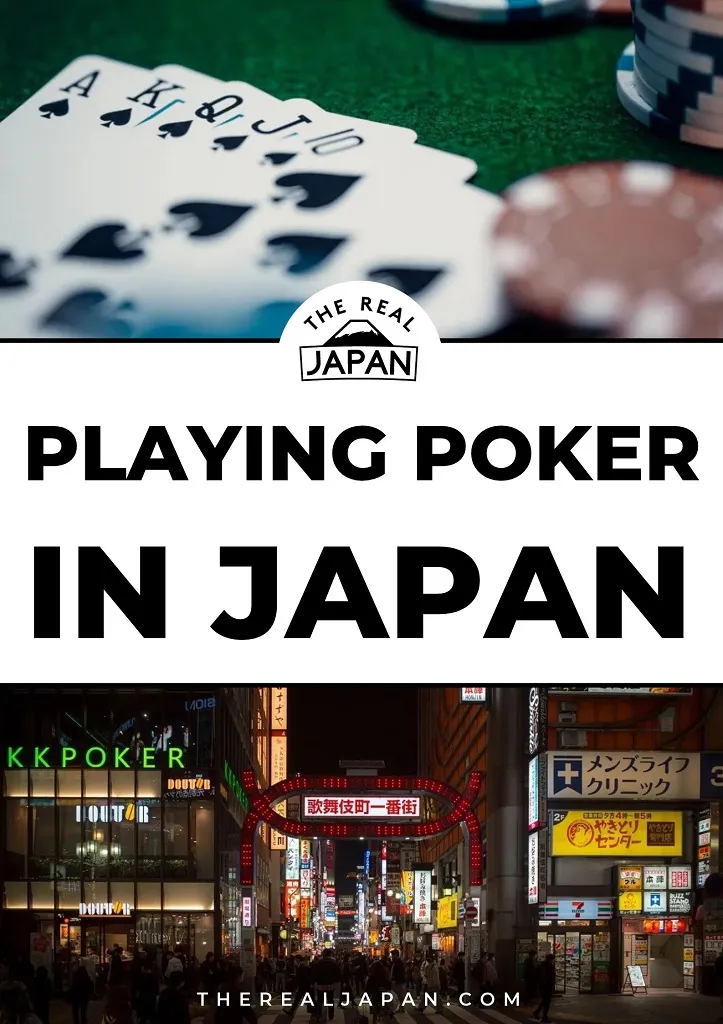
Summary
Playing poker in Japan when you don’t speak Japanese is possible, as long as you confirm English support with the organiser beforehand and stick to clear, standard poker terms at the table.
Key Takeaways
- Familiarise yourself with the law. Japan’s Criminal Code bans playing for real money in commercial venues.
- Not every Japanese poker event accommodates English, so check the organiser’s language policy before adding a tournament to your itinerary.
- Poker is mostly about procedure, not tone. A stated bet or a movement of chips has a defined meaning, so you shouldn’t need to read between the lines.
- Online players, take note: a physical table asks you to track whose turn it is and communicate through words and chips, something your software normally handles for you.
- Use plain English poker terms like “check,” “call,” “raise” and “fold.” A spoken declaration in turn is binding, so don’t say “call” until you mean it.
- Don’t count on a translation app mid-hand. Many tournaments ban phones while you hold cards, so use translation tools beforehand to prepare your questions.
Want more free content like this?
- Summary
- Key Takeaways
- Following your passions while travelling in Japan
- Basic rules on playing poker in Japan
- Confirm English support before entering
- Make actions clear before moving chips
- Prepare without relying on a translation app
- Keep conversation separate from play
- Playing Poker in Japan FAQ
- Leave A Comment / Ask A Question
- About the Author
- RESOURCES
Following your passions while travelling in Japan
Keeping up personal hobbies or passions while travelling in Japan is something I’m getting asked about more and more recently. Cycling, hiking, gaming, running, playing golf or keeping up the gym visits while working your way around the country have all cropped up.
Though many people enjoy playing poker while travelling, it’s undeniable that it can sometimes lead to complexities, with language often being the biggest. Fortunately, you can use English at some poker events held in Japan.

For any visitor who understands the game, being able to speak English when playing allows you to focus on table procedure and communication with staff. The useful question is whether you can follow the action, make your intentions clear, and obtain clarification at the particular event you want to enter.
Communication in Japan tends to be more indirect than in many other cultures, which is worth knowing before you arrive in the country. Treat the insight as background for social encounters, rather than a guide to interpreting poker actions. At the table, a stated bet or a movement of chips has a defined function. You should not have to guess an instruction from someone’s tone.
Basic rules on playing poker in Japan
The good news is that poker in Japan is played by the same international rules you already know, so Texas Hold’em at a Tokyo table will feel instantly familiar.
What’s different is the legal setting. Japan’s Criminal Code bans playing for real money in commercial venues, so poker bars and clubs (Poker Bar Visit and tournament series like the Japan Open Poker Tour, for example) run on an amusement or tournament-fee model rather than a cash-game one.
You pay to play, but you don’t win cash. Instead, prizes tend to come in the form of merchandise, non-cash vouchers, points tracked through apps like Poker Fans, tickets into future tournaments, or even seats in bigger domestic and international championships. Go in with that expectation and you’ll have a great night without any awkward surprises.
Confirm English support before entering
Check the organiser’s language policy before adding a tournament to your itinerary. Not all Japanese tournaments will accommodate English.
Ask how English-speaking participants receive instructions and whom to approach when something is unclear. Be specific about needing help with table procedures, especially if your previous experience has been entirely online. Keep your request in plain English, without the shorthand you might use with friends back home.
For anyone familiar with online poker, the move to a physical table adds communication that a screen normally handles. Selecting an action online records a decision through the software. In person, you must follow whose turn it is and communicate through words, chips, or an accepted gesture.
Recognising “call” on a screen and saying it clearly at the right moment are different parts of playing. You can still learn a lot from playing online, but they are quite different experiences.
If you’re predominantly an online player, practice saying chip amounts aloud before you join a tournament. Review the event’s rules for declaring bets, handling chips, and asking questions. Identify anything you have previously relied on software to manage; many poker sites provide useful software to make playing more convenient, but you will have to do without this at a physical table, so make sure you’re prepared for that transition.
Make actions clear before moving chips
Many poker tournaments in Japan ask players to confirm that it is their turn before acting. They also recommend announcing bet amounts clearly and putting the intended chips forward together. These are concrete habits to learn before worrying about holding a conversation with everyone seated around you.
Use standard poker terms when declaring an action. Most tournaments recognise terms including “check,” “call,” “raise,” and “fold.” Spoken betting declarations made in turn are binding. Saying “call” commits you to the current action.
Keep a question separate from a declaration. “How much is the bet?” asks for information without announcing your decision. “Is it my turn?” establishes whether you should act. If an explanation is unclear, ask the dealer to repeat it before moving any chips. Wait until you understand the answer before declaring what you will do with your hand.
Asking for a count does not transfer responsibility for the bet to the dealer. A spoken call can commit you to the correct amount, even if the amount you heard was wrong.
Ask about procedure without seeking advice on your cards. A dealer can clarify the action; choosing whether to continue in a hand remains your decision. For an unresolved procedural issue, ask the dealer to involve the floor, the tournament staff responsible for rulings. Explain the specific point you did not understand, then answer any questions staff need to ask.
Prepare without relying on a translation app
A translation app should not be your plan for handling uncertainty during a live hand. Many poker tournaments prohibit smartphone use while holding a hand, and may also prohibit devices, earphones, and headphones at tables being live-streamed.
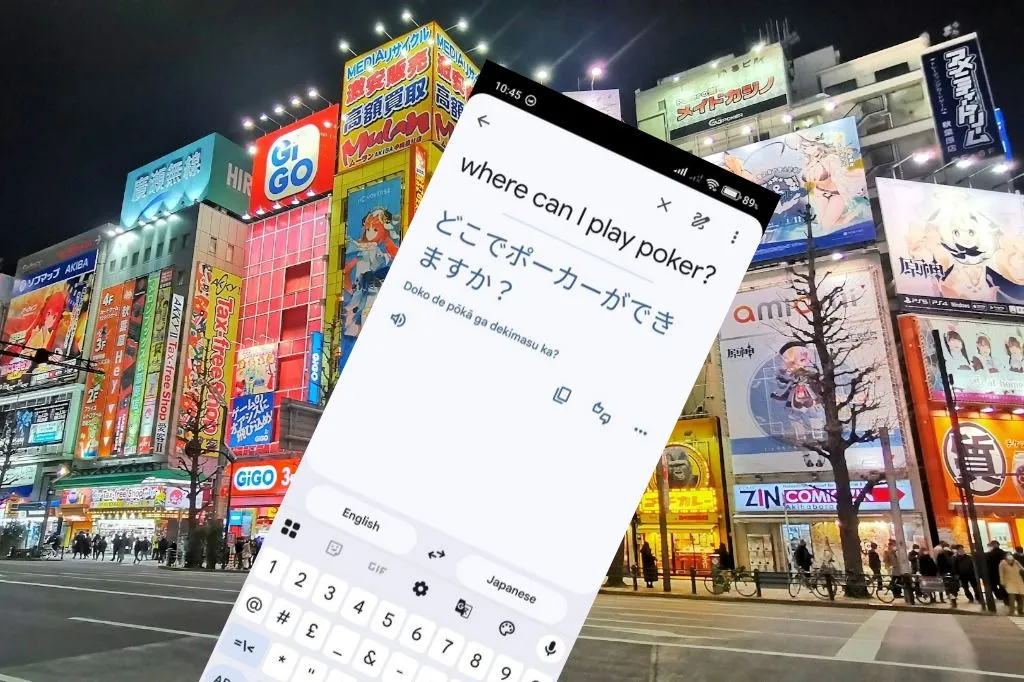
If necessary, use translation tools beforehand to understand event information and prepare questions for the organiser. Resolve unclear wording with staff, rather than relying on an automatic translation of a poker term. Before taking your seat, establish how you should request an explanation in English and when devices may be used.
Keep the event name, venue details, and organiser’s replies available for your journey and arrival. Once play begins, direct questions to the dealer. Do not assume that finishing your own action makes phone use permissible while you still hold cards.
Keep conversation separate from play
A little Japanese can still make introductions and thanks easier. This post has some good travel tips for when you don’t speak the language. Learning a few essential Japanese phrases is useful for acknowledging staff and fellow players without attempting a conversation beyond your vocabulary (it’s all too easy to get sucked in out of your depth – I speak from experience!).
Keep those courtesies distinct from the words you use to act. You can greet someone in Japanese and use the event’s accepted English poker terms during a hand. There is no need to improvise a Japanese declaration to make a polite impression.
Before attending, settle two questions: is English accepted at your chosen event, and how will you obtain clarification when you need it? Clear answers give you something concrete to prepare around, whether or not you can make conversation in Japanese.
Playing Poker in Japan FAQ
Q: Can I really play poker in Japan if I don’t speak Japanese?
A: Yes, at some events. English is used at certain tournaments, but it isn’t universal, so ask the organiser how English-speaking players get instructions and who to approach when something is unclear.
Q: What should I say to the organiser before I enter?
A: Keep it simple and specific. Ask how English speakers receive instructions, and be clear if you need help with table procedure, especially if your experience has been online only. Plain English works best, without any slang you’d use with friends at home.
Q: Does it matter if I say “call” and the amount I heard was wrong?
A: It does. A spoken call can commit you to the correct amount, even if what you heard was wrong, and asking for a count doesn’t pass responsibility for the bet to the dealer. If an explanation is unclear, ask the dealer to repeat it before you touch your chips.
Q: Can I use a translation app at the table?
A: Best not to rely on one. Many tournaments prohibit smartphone use while you’re holding a hand, and some also ban devices and headphones at live-streamed tables. Use translation tools in advance to understand event information and prepare questions, then direct anything that comes up during play to the dealer.
Q: Is it worth learning a bit of Japanese anyway?
A: Absolutely, for courtesy. “Konnichiwa” (a daytime greeting) and “arigatou gozaimasu” (a polite thank you) go a long way with staff and fellow players. Just keep those separate from your actions: greet in Japanese, then use the event’s accepted English poker terms during a hand.
About the Author

A writer and publisher from England, Rob has been exploring Japan’s islands since 2000. He specialises in travelling off the beaten track, whether on remote atolls or in the hidden streets of major cities. He’s the founder of the multi-award-winning TheRealJapan.com.
Recommended For You

RESOURCES
Further Related Guides
Gambling In Japan – A Beginner’s Guide
Exploring Tokyo Gaming Culture From Classic Arcades to VR Experiences
Japan VPN Buyer’s Guide: Comparing the Top 3 Services Before You Buy
More Experience Resources
My List of Recommended Japan Travel Resources
Recommended Japan Travel Resources
My Japan Travel Store
Feel free to share this guide if you found it helpful: