Summary
An essential planning guide to experiencing Nara’s sacred sika deer safely and authentically, combining cultural insights with expert tips on how to escape the day-trip crowds by exploring historic Naramachi and staying overnight.
Key Takeaways
- Sacred History: Nara’s iconic sika deer are protected as official Natural Monuments and have been revered for centuries as sacred Shinto messengers of the gods.
- Safety First: While photogenic, these are entirely wild animals that can bite, kick, butt, or knock you down if they feel teased, cornered, or frustrated by food.
- Signal Intention: When you run out of deer crackers (shika-senbei), raise both hands with open palms facing the deer to clearly signal you have no more food left.
- Escape the Bottlenecks: Bypass the heavily congested main paths by heading south into the quiet, historic merchant district of Naramachi to find exceptional independent coffee and cake shops.
- Witness the Twilight: Staying overnight allows you to experience the park’s profound stillness at dusk, when the daytime crowds evaporate and the deer calmly saunter back across the empty streets.
- Premium Stays: To beat the morning tour buses, book an overnight stay via Booking.com at high-end accommodations like the luxurious JW Marriott, the historic Nara Hotel, or the tranquil Tsukihitei ryokan.
Listen to the podcast ►
Want more free content like this?
- Summary
- Key Takeaways
- VIDEO: Strolling with Sika Deer in Nara Park
- Furry residents as Natural Monuments
- Safety first: reading the official Nara Park warning signs
- VIDEO: Natural Spectacle of Rutting Sika Deer in Nara Park
- Exploring Nara Park & moving on to Naramachi
- Escaping the crowds: Watching the twilight descent
- Why you should stay overnight: luxury & boutique Nara accommodation
- Practical information
- Wrapping up: making the most of your Nara adventure
- Hand Feeding Deer in Nara Park FAQ: Frequently Asked Questions
- Leave A Comment / Ask A Question
- About the Author
- I'm Rob, and I've been where you are
- Benefits You Can Choose
- What Clients Say
- How It Works
- Ways I Can Help You With Concierge
- Ready to Get Started?
- RESOURCES
VIDEO: Strolling with Sika Deer in Nara Park
Furry residents as Natural Monuments
To truly appreciate Nara Park, you have to look beyond the immediate charm of its furry residents. These are not semi-domesticated park animals; they are the sika deer of Nara, designated as official Natural Monuments in Japan, and their history here stretches back over a thousand years.
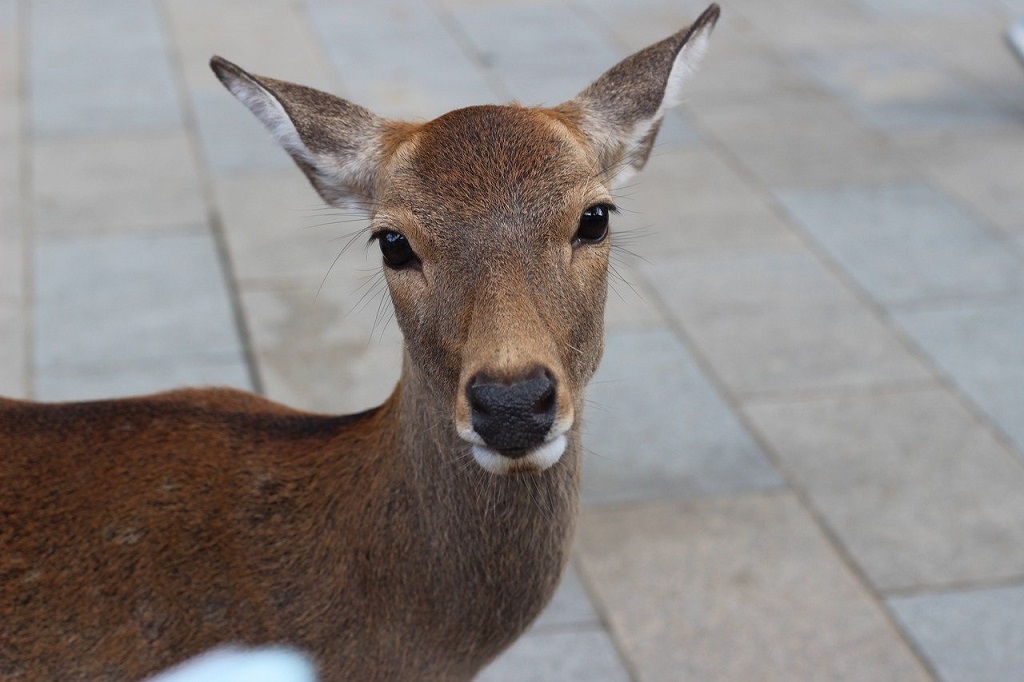
According to local Shinto tradition, when the powerful god Takemikazuchi-no-mikoto was enshrined at Kasuga Taisha Shrine in 768 AD, he arrived riding a mythical white deer. From that moment on, the deer of Nara were considered sacred messengers of the gods.
For centuries, harming one was a capital offence, punishable by death. While the laws are naturally different today, that deep-seated cultural reverence remains, which is why they are permitted to roam so freely through the park, temples, and even the local streets.
Kyoto and Nara: Full-Day Sightseeing Tour
Safety first: reading the official Nara Park warning signs
Because they look so photogenic, it is easy to forget that these are entirely wild, unpredictable animals. They’re pretty much motivated by one thing: food. If you have shika-senbei (deer crackers) in your hand, you will be the centre of attention.
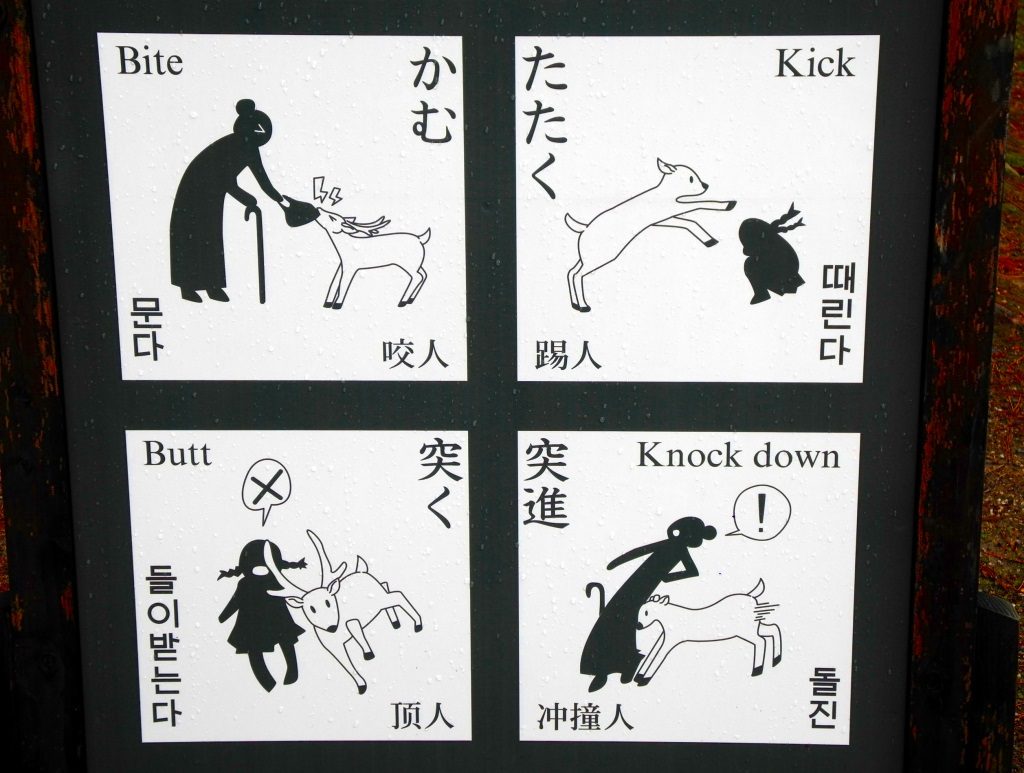
To keep visitors safe, the local authorities have installed illustrated warning signs throughout the park. They are iconic, minimalist, and very direct. They break down the four main behaviours you need to watch out for:
- Bite (Kamu – かむ): If you tease a deer by holding a cracker out of reach for too long to get a photo, they will nip you, your clothes, or your bags to get your attention.
- Kick (Tataku – たたく): If a deer feels cornered, startled, or frustrated, it can strike out surprisingly quickly with its front hooves.
- Butt (Tsuku – 突く): Deer will use their heads—and in the case of males, their antlers—to push or nudge visitors forcefully if they think you are hiding food.
- Knock Down (Tosshin – 突進): A full-on charge. This is a particular risk during the autumn mating season (when males can be highly aggressive) and the spring calving season (when mothers are fiercely protective of their fawns).
A Tip on Visiting with Children: I remember visiting Nara Park with my wife and a friend who brought along her three-year-old daughter. The little girl was absolutely captivated by the deer and desperately wanted to get close enough to touch them.
VIDEO: Natural Spectacle of Rutting Sika Deer in Nara Park
It was a magical moment, but we had to watch over the interaction with absolute vigilance. Never leave children unattended with the deer, and ensure they don’t run or scream, which can easily startle the animals.
Exploring Nara Park & moving on to Naramachi
Most day-trippers follow an identical, heavily congested loop: they exit Kintetsu Nara Station, walk straight up the main path into the park, feed the most aggressive deer near the entrance, crowd into Tōdai-ji to see the Great Buddha, and then jump right back on the train to Kyoto or Osaka.
You can do better than that.
Once you have explored the main park area and paid your respects to the Great Buddha, bypass the crowds by heading south towards the quiet, winding streets of Naramachi. This is the old merchant district of Nara, filled with beautifully preserved traditional wooden buildings (machiya), boutique craft shops, and hidden residential alleys.
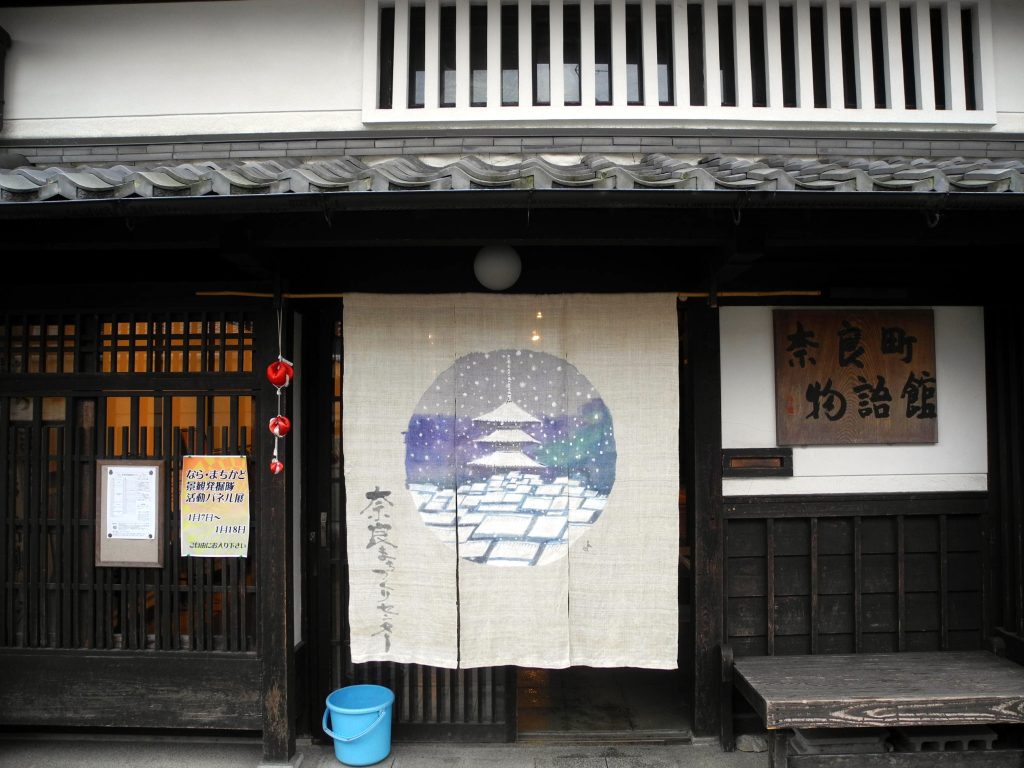
It is also an absolute paradise if, like my wife and me, you are total coffee and cake nuts!
After hours of walking the park, there is nothing better than ducking into one of Naramachi’s independent specialty coffee shops or traditional tea houses. You will find incredibly high-quality, artisan western-style desserts, exquisite seasonal cakes, and expertly brewed coffee hidden behind unassuming, historic storefronts. It is the perfect place to slow down, recharge, and digest the day’s experiences.
RELATED: Naramachi: Lunch, Sweets and Coffee in Nara’s Merchant Quarter
Escaping the crowds: Watching the twilight descent
The real secret to experiencing the magic of Nara is simply timing. As the afternoon peaks and the sea of day-trippers begins to retreat back to the train stations, the entire atmosphere of the town shifts.
The frantic energy evaporates, replaced by a profound, historic stillness.
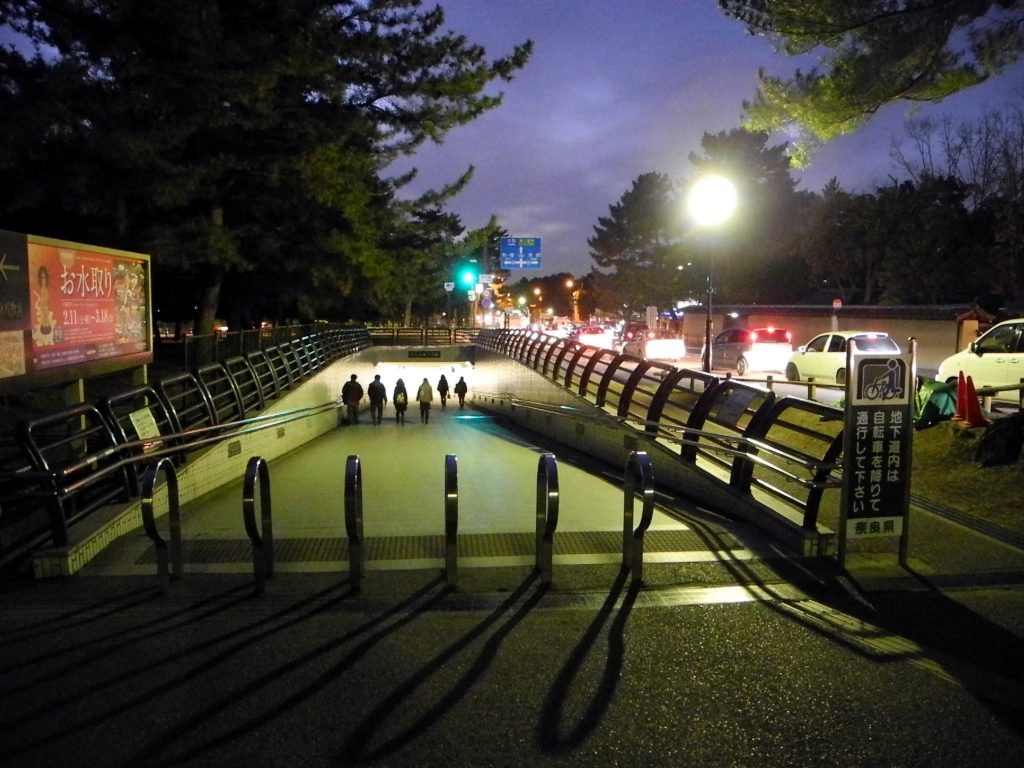
My wife and I have a wonderful, vivid memory of sitting back and relaxing in Naramachi just as the evening twilight began to descend. As the streets quietened, a parade of deer emerged from the park boundaries, calmly and methodically crossing the road right in front of us.
They moved with an uncanny, quiet purpose – looking for all the world like a group of well-behaved school children sauntering home after a long day. It is an enchanting sight you will completely miss if you rush back to the city before dusk.
Why you should stay overnight: luxury & boutique Nara accommodation
To experience that twilight serenity and enjoy the misty, crowd-free mornings before the tour buses arrive, staying overnight in Nara isn’t just recommended – it is essential. For a truly memorable stay, here are three exceptional, high-end accommodations that can be booked directly via Booking.com:
The historic icon: Nara Hotel
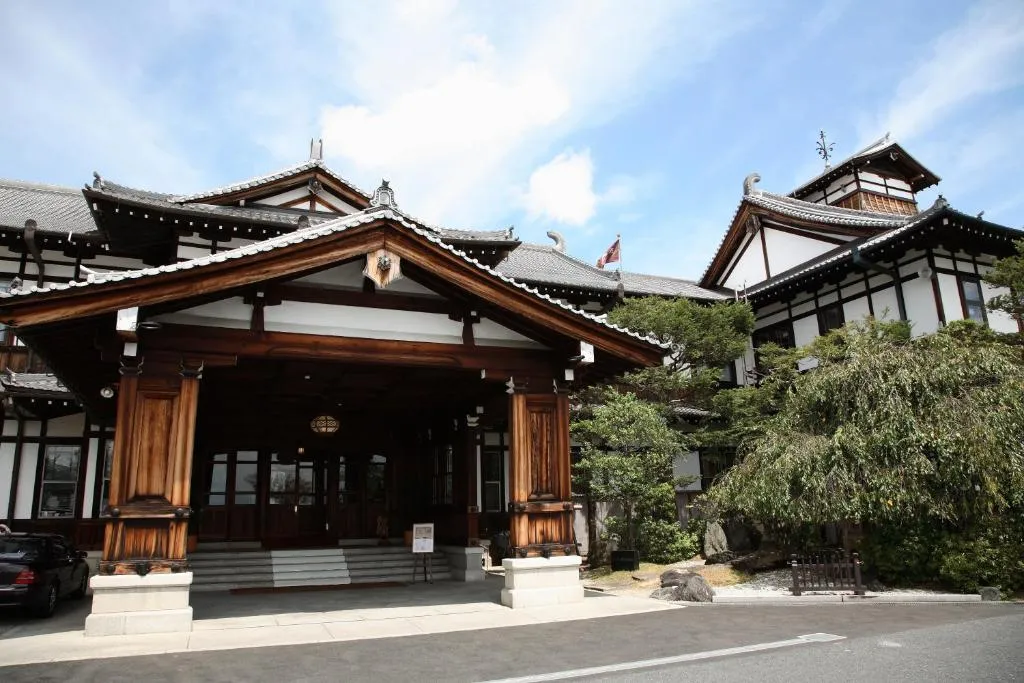
Operating since 1909, this legendary property is an architectural masterpiece. Nara Hotel blends traditional Japanese timelessness with classic mid-century Western design, having hosted royalty, heads of state, and cultural icons like Albert Einstein and Charlie Chaplin. Staying here feels like stepping into a living museum of Japanese prestige.
The modern luxury pick: JW Marriott Hotel Nara
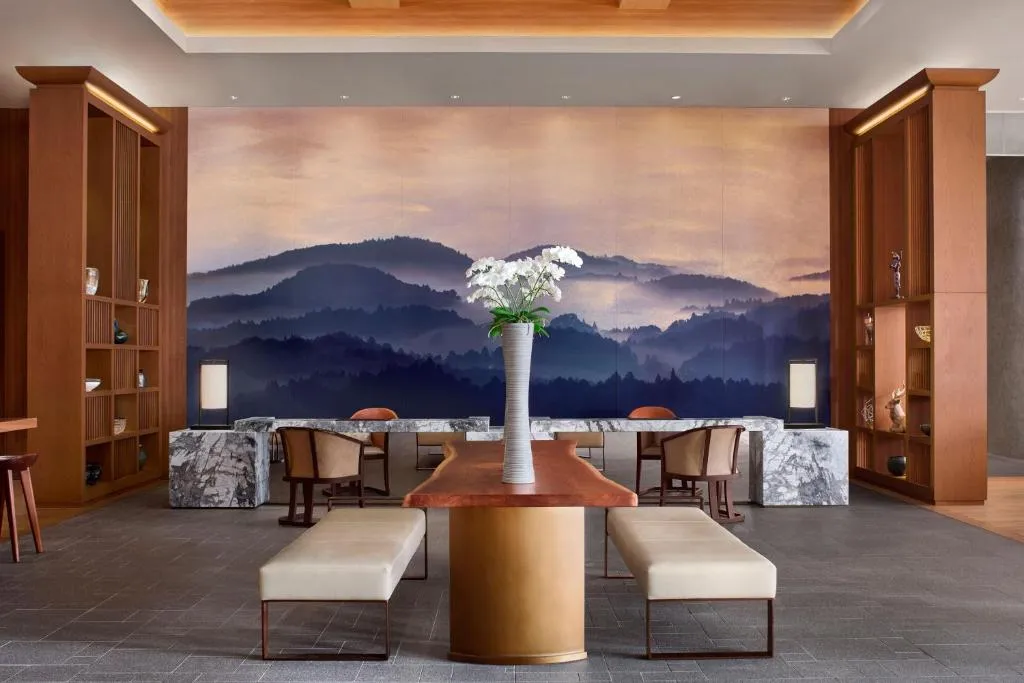
For travellers seeking flawless, contemporary international luxury, the JW Marriott Hotel Nara is the premier choice in the city. The service is impeccable, the design beautifully incorporates subtle nods to Nara’s natural heritage, and the premium amenities provide a highly sophisticated base to return to after a full day of exploring.
The premium authentic experience: Tsukihitei
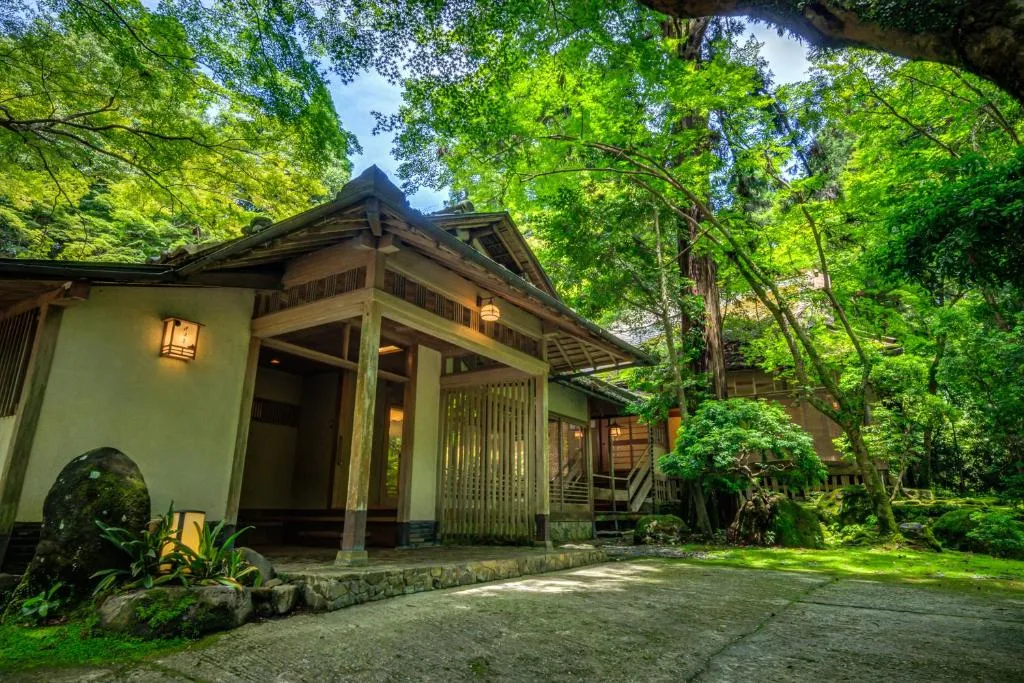
If you want to completely escape the modern world, Nara Kasugaokuyama Tsukihitei – a high-end, traditional ryokan – is tucked away inside the sacred, ancient primeval forest of Kasuga Taisha. With only a handful of exclusive rooms, it offers unparalleled tranquility, private forest views, exceptional kaiseki dining, and an authentic taste of historic Japanese hospitality.
Practical information
Planning your visit properly makes all the difference between a chaotic dash through the crowds and a seamless, enjoyable experience. Use these verified logistics to plan your time in Nara.
Getting There: Kintetsu Line vs. JR Line
Nara is easily accessible as a day trip or overnight stay from both Kyoto and Osaka, but your choice of train line will dictate how much walking you have to do upon arrival.
- The Kintetsu Line (Highly Recommended): If you want the most direct and convenient access, take the Kintetsu Line to Kintetsu-Nara Station.
- From Kyoto: Direct Limited Express trains take around 35 minutes.
- From Osaka: Rapid Express trains from Osaka-Namba Station take roughly 40 minutes.
- The Advantage: When you exit Kintetsu-Nara Station, you are practically at the edge of the park. It is a very short, pleasant walk up Sanjo-dori street straight to the deer and the entrance of Naramachi.
- The JR Line: If you are using a JR Pass, you will likely choose to arrive at JR Nara Station.
- The Catch: JR Nara Station is located significantly further west of the park. It will add an extra 15 to 20-minute walk through the town just to reach the park boundaries. If you have mobility concerns or want to save your energy for the park itself, the Kintetsu line is well worth the separate ticket fare.
Timing your visit
To get the most out of your time, avoid the peak midday crush (typically between 11:00 am and 3:00 pm) when tour buses flood the main avenues leading to Tōdai-ji.
The absolute best times to explore are early morning (before 9:00 am) when the park is beautifully misty and the deer are alert and hungry, or late afternoon (after 4:30 pm) when the day-trippers head back to their coaches and trains and the peaceful, atmospheric twilight sets in.
Buying deer crackers (Shika-Senbei)
You do not need to hunt for snacks beforehand – and you absolutely must not feed the deer any human food, wrappers, or plastics, which can be fatal to them.
- Where to Buy: Official wooden carts with green umbrellas are dotted all over Nara Park.
- Cost: A bundle of 10 official crackers costs 200 yen.
- The Cause: These specific crackers are made safely from wheat flour and rice bran with zero sugar. A portion of the proceeds from every single pack sold goes directly to the Foundation for the Protection of Deer in Nara to fund their ongoing welfare and medical care.
Luggage storage tips
Do not attempt to navigate Nara Park or the narrow lanes of Naramachi while dragging large suitcases. The deer are incredibly inquisitive and will happily chew on luggage straps, zips, or paper maps right out of your hands.
Both Kintetsu-Nara and JR Nara stations have extensive banks of coin lockers available. If your bags are too large for standard lockers, Kintetsu-Nara Station features a dedicated baggage storage service counter where you can leave large suitcases for a flat daily fee.
Alternatively, if you take my advice and stay overnight, simply drop your bags at your hotel desk before heading out to the park.
Official travel sites
- Official Nara Tourism Federation Guide: Visit Nara – The best official portal for up-to-date festival schedules, seasonal opening hours for temples, and local maps.
- Japan National Tourism Organization: JNTO Nara Guide – Good overview of the wider Nara prefecture for those looking to explore beyond the central park.
Wrapping up: making the most of your Nara adventure
Nara is so much more than a convenient tick on a whirlwind holiday itinerary. While the image of bowing deer and grand temple gates is what draws millions of visitors every year, the real magic of this ancient capital reveals itself only when you choose to slow down.
By steering away from the central tourist bottlenecks, stepping into the quiet historic lanes of Naramachi (for a well-deserved coffee and cake 😊), and staying overnight to witness the twilight descent, you transform a standard day trip into a profoundly memorable highlight of your time in Japan.
Approached with the right respect for the local etiquette, a watchful eye on the safety signs, and a willingness to explore past the main paths, an encounter with Nara’s sacred sika deer is an unforgettable experience.
Just remember to pack your patience, keep your palms open when the crackers run out, and give yourself the time to let Nara’s timeless charm unfold at its own pace.
Hand Feeding Deer in Nara Park FAQ: Frequently Asked Questions
Q: Are the deer in Nara Park safe to pet?
A: While they are famously accustomed to humans, they are entirely wild, unpredictable animals motivated by food. You can interact with them closely, but you must remain vigilant, avoid cornering them, and closely supervise young children at all times.
Q: What do I do if a deer gets aggressive or won’t leave me alone?
A: Do not run away, scream, or hide food behind your back, as this can cause them to chase or nip you. Instead, raise both hands with your open palms facing toward the deer; they recognise this universal sign that you are out of crackers and will promptly move on.
Q: Can I feed the deer any snacks I brought with me?
A: Absolutely not. You must only feed them the official deer crackers (shika-senbei) sold at the wooden carts throughout the park. Human food, plastics, and wrappers are incredibly dangerous and can be fatal if ingested by the deer.
Q: What is the best time of day to visit Nara Park to avoid the crowds?
A: The best times are early morning (before 9:00 am) when the park is misty and peaceful, or late afternoon (after 4:30 pm) when the overwhelming sea of day-trippers heads back to the trains, leaving the park beautifully still.
Q: Is it worth staying overnight in Nara?
A: Yes, it is highly recommended. Staying overnight allows you to experience the town’s profound, historic stillness at dusk – including watching the deer calmly saunter back through the streets at twilight – and lets you explore the major sights the next morning before the tour buses arrive.
Q: Which train station should I use when traveling from Kyoto or Osaka?
A: The Kintetsu-Nara Station is highly recommended because it drops you off right at the edge of the park and Naramachi. Arriving at JR Nara Station adds an extra 15 to 20-minute walk through the town just to reach the park boundaries.
About the Author

A writer and publisher from England, Rob has been exploring Japan’s islands since 2000. He specialises in travelling off the beaten track, whether on remote atolls or in the hidden streets of major cities. He’s the founder of the multi-award-winning TheRealJapan.com.
Want a Japan trip that perfectly balances the iconic and the authentic? Concierge is my personalised travel planning service crafting journeys that align with your specific interests while incorporating both must-see highlights and hidden gems most tourists miss. Together, we’ll create an experience that goes beyond the surface, connecting you with the Japan you’ve always dreamed of discovering.
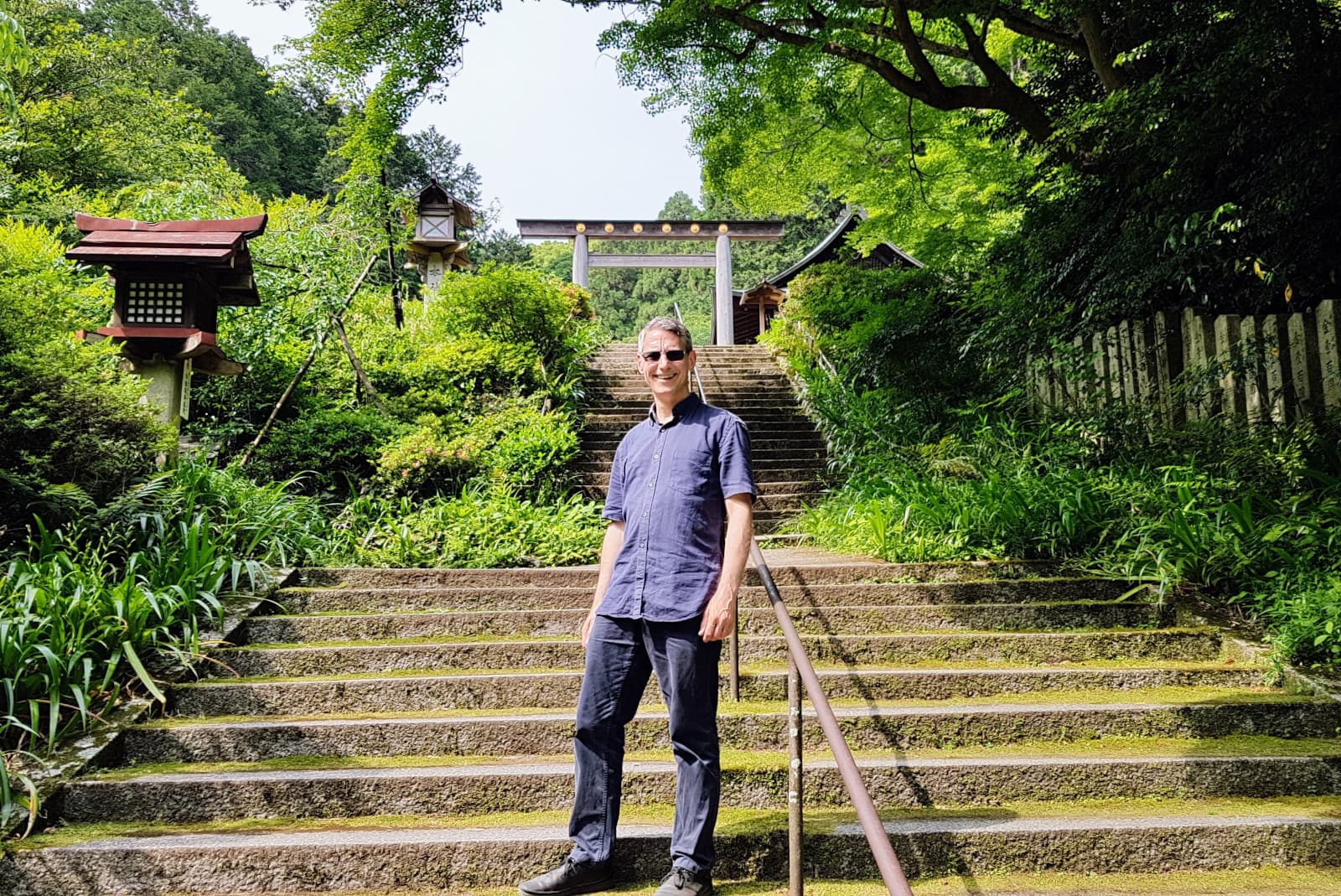
I’m Rob, and I’ve been where you are
I understand the struggle of building an itinerary that perfectly balances the iconic and authentic sides of Japan.
That’s why I founded The Real Japan, a place where independent travellers like you can thrive. My passion for sharing Japan beyond the cliches is what drives me.
I offer more that just inspiration; I provide personalised, unique and tailor-made travel plans to take your travels in Japan to the next level.
Want to see how I can transform your Japan travel?
Benefits You Can Choose
Personal Itinerary
A tailor-made Japan Travel Plan matching your personal interests
and preferences
Unique Experiences
A unique Artisan Experiences Plan giving you private access to Japan’s finest craftspeople
Perfect Lodging
Curated accommodation/hotel recommendations based on your needs and criteria
What Clients Say
Practical advice, suggestions and recommendations

“Rob will actually prepare a detailed day-by-day itinerary with activities and day-trip ideas, transport indications and relevant hyper-links to places, guides and other interests.“
Mario Mizzi
Malta
Incredibly valuable to re-working my itinerary

“I was unclear on scheduling and logistics and I needed some advice on the best sights and cities. The service provided by Rob was incredibly valuable to re-working my itinerary. Picking Rob’s brain was extremely useful.”
Martine F
Canada
Saved me more than the cost of the service. Excellent stuff!

“I spent weeks deciding what to do. Just a few tweaks with Rob and I’m now even more excited than ever! For me, the service was to get the best experiences and best use of my time while there.“
Andrew Rondeau
UK
How It Works
Step 1: Book your service
Choose the plan duration that best fits your needs.
I have 4 options to choose from.
Step 2: I’ll handle all the details
I’ll ask you questions, we can jump on a Zoom call,
or you can email me your draft ideas.
Step 3: Your dream Japan
I set aside time to work exclusively on your travel plans.
I deliver your personal solution.
Ways I Can Help You With Concierge
Ready to Get Started?
Recommended For You
RESOURCES
Further Related Guides
Naramachi: Lunch, Sweets and Coffee in Nara’s Merchant Quarter
How To Spend A Week In Kansai (And Not Visit Kyoto)
More Experience Resources
My List of Recommended Japan Travel Resources
Recommended Japan Travel Resources
My Japan Travel Store
Feel free to share this guide if you found it helpful: