
Summary
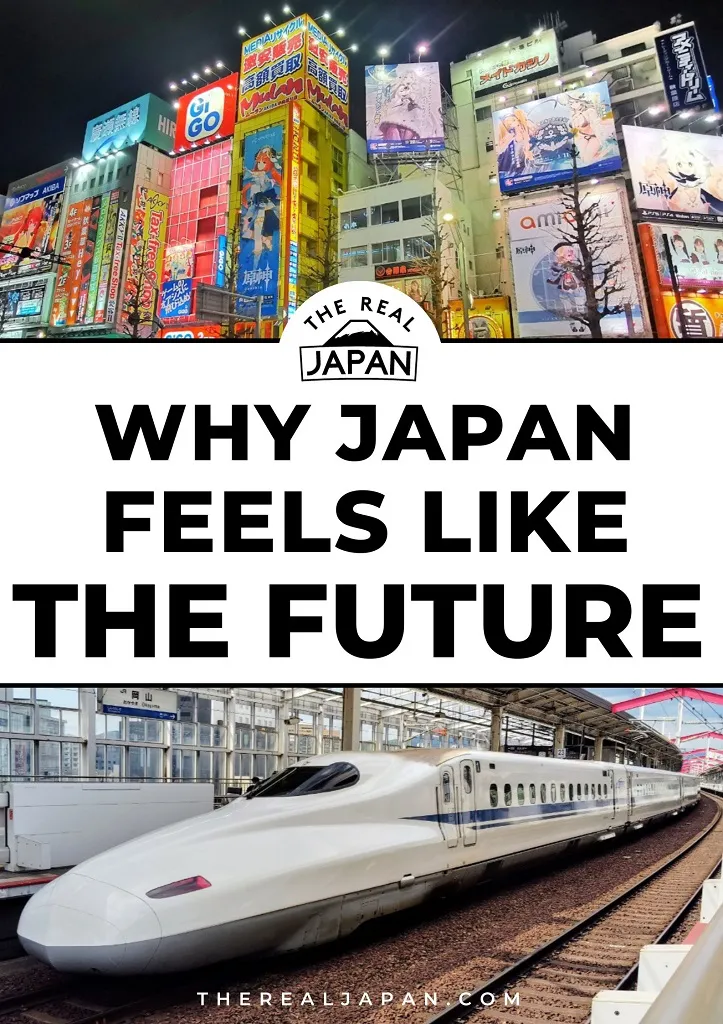
Why Japan feels like the future – from pocket-sized gadgets to robotics, gaming culture and an early embrace of crypto – its one of the reasons why people want to visit in the first place.
Key Takeaways
- A reputation that draws visitors in – Japan’s image as a country living in the future is a huge part of its pull, and decades of “make it smaller, make it better” thinking built that reputation, not one company or gadget.
- Portable tech started here – from the Game Boy to camera-equipped mobile phones, Japan built and shipped these ideas years before the rest of the world caught up.
- Crypto has quietly taken root – Japan recognised Bitcoin as legal payment back in 2017, and retailers like Bic Camera have accepted it ever since.
- Gaming is a full-blown culture, not just hardware – Tokyo in particular turns retro arcades, VR and gaming festivals into genuine visitor experiences.
- A handful of household names still lead globally – Sony, Nintendo, Canon and Nikon remain global benchmarks, with Sony’s image sensors now heading into a major new joint venture with TSMC.
- Robots are part of daily life, not Sci-Fi – from factory floors to hotel front desks, Japan treats robotics as something to keep improving rather than a novelty.
Want more free content like this?
- Summary
- Key Takeaways
- It started with things you could put in your pocket
- It shows up in how you pay and play
- Gaming as culture, not just hardware
- Where to see the arcade side of this for yourself
- The names you already know, still shaping things now
- Robots, because why not?!
- From novelty ideas to genuinely useful
- Leave A Comment / Ask A Question
- About the Author
- RESOURCES
Japan has spent decades building a reputation as one of the world’s great technology hubs. That image is easy to understand once you take to the streets in a Japanese city. You see high-speed trains and advanced uses of technology all over the country. There is also an interest in making everyday technology smaller and more useful.
When I’m working with clients, I always ask what attracted them to Japan. And the country’s reputation for gadgets and tech is one of the reasons people put the Japan on their list in the first place.
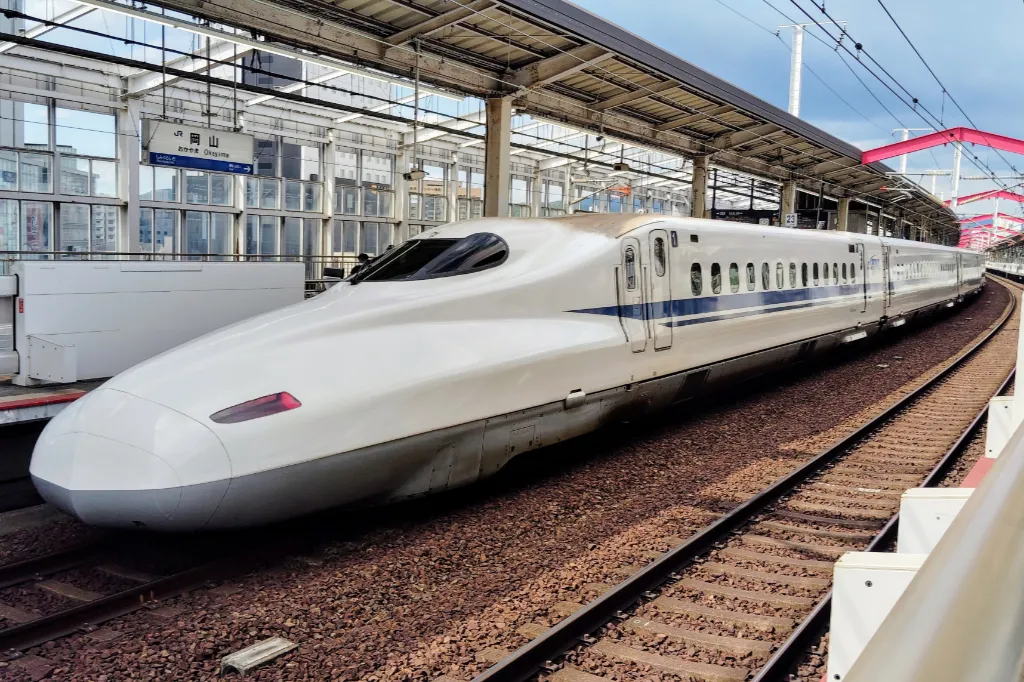
There’s a sense that you’ve stepped into the future the moment you land. It’s not one gadget or one company. It’s decades of a culture that treats “make it smaller, make it better” as a national pastime, and you feel it everywhere from the shinkansen platforms to the vending machines on a quiet backstreet.
It started with things you could put in your pocket
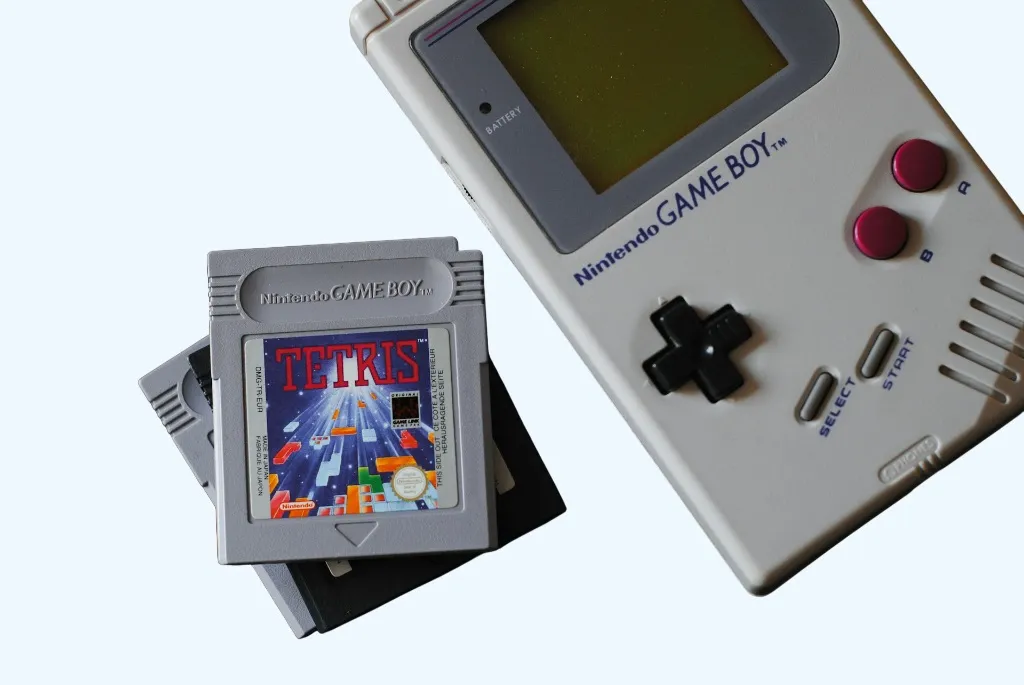
Long before “portable” was a buzzword, Japanese companies were turning entertainment into something you carried with you. The Game Boy changed gaming forever, and Japanese mobile phones had cameras and proper messaging years before anyone else caught up.
That habit of building first and letting the rest of the world follow is baked into how the country still approaches technology today.
It shows up in how you pay and play
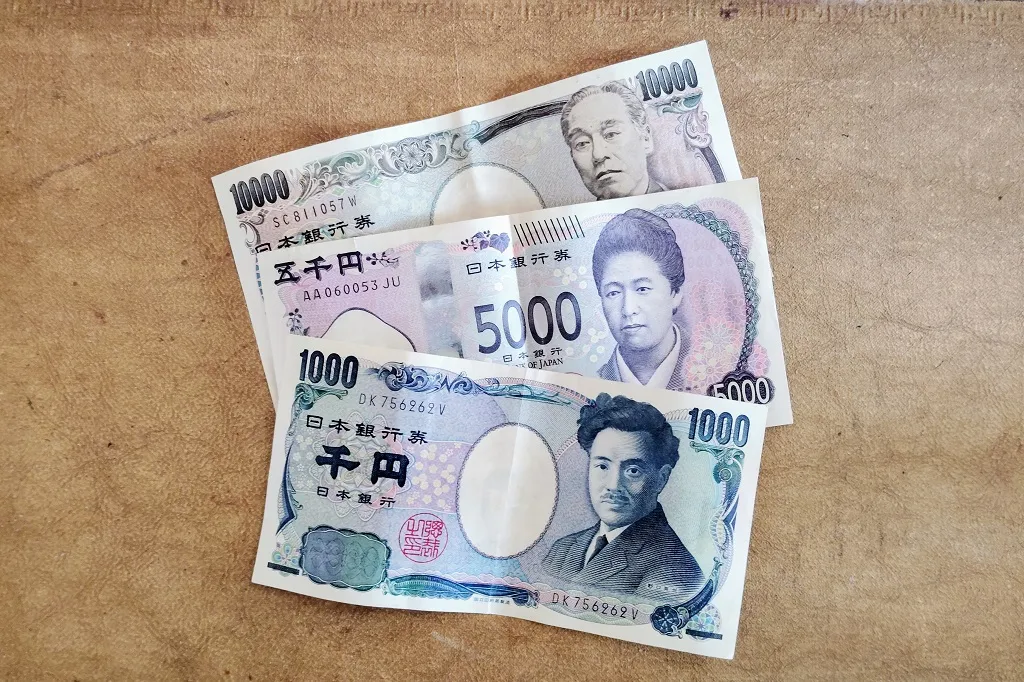
One of the more surprising things for first-time visitors is discovering that Japan, a country famous for its perpetual love of cash and coin trays at the register, has actually been ahead of the curve on cryptocurrency for years.
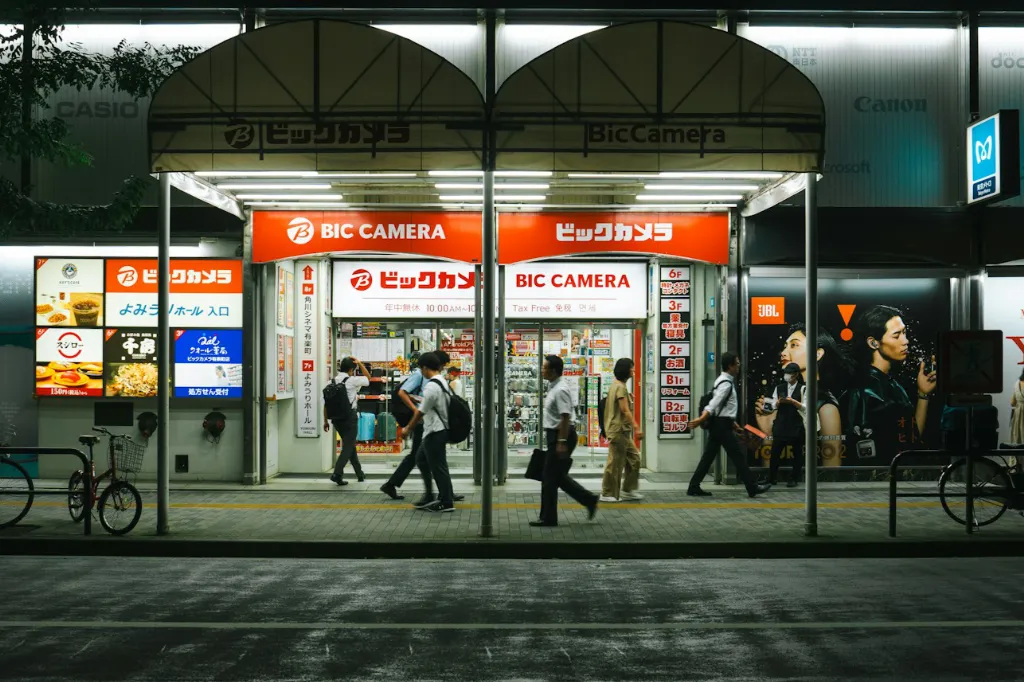
Bic Camera has accepted Bitcoin as payment since 2017, and Japan recognised it as a legal payment method that same year. It’s not something you’ll use to pay for your ramen, but if you already hold digital assets, it’s another small example of old and new sitting side by side here.
Crypto has become more than simply another way to send money. Gaming has been one of the most visible areas of experimentation. Blockchain games and play-to-earn titles have attracted attention from Japanese developers. These games use blockchain and tokens as a part of the mechanics of the game.
The number of crash games played online has continued to grow and become one of the more visible parts of that crypto-native culture. Developers are releasing new twists and different designs all the time.
That’s what makes crypto interesting from a technology point of view. It has encouraged its own communities and design ideas rather than simply sitting beside cards and bank transfers as another payment choice.
I go into the full picture of payments in Japan, crypto included, in my guide to How to Pay For Things in Japan.
Gaming as culture, not just hardware
Nintendo, Sony, Sega, Capcom, Square Enix, Konami – between them they didn’t just make machines, they built entire worlds and turned home consoles into cultural objects.
That’s the bit I find most interesting when I’m travelling around Japan: you can visit places that feel like they walked straight out of a game, because in a lot of cases, they did!
Tokyo especially takes this further than anywhere else I’ve been – I’ve written a full guide to Tokyo’s gaming culture if you want to go deeper, from retro Akihabara arcades to some genuinely startling VR.

Where to see the arcade side of this for yourself
If reading about Tokyo’s gaming culture has you curious, the best way in is still Akihabara. Here you can wander the multi-storey arcades stacked with everything from classic Pac-Man cabinets to the latest rhythm games.
Or head into one of the city’s high-end gaming cafes for a few hours on the newest consoles in far nicer surroundings than you’d get back home.
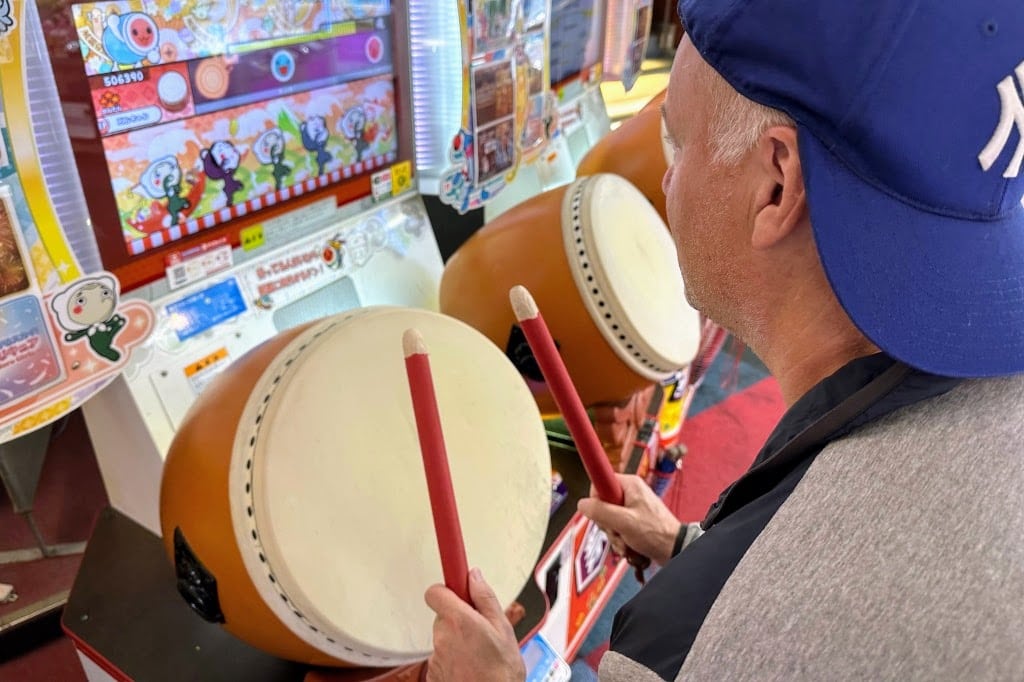
If you’d rather have someone walk you through it, a guided anime and gaming tour of Akihabara is an easy way to get context on what you’re looking at rather than just wandering past it.
The names you already know, still shaping things now
Sony, Nintendo, Panasonic, Canon, Nikon – I don’t think any other country has produced this many brands that became part of everyday life globally. Photography in particular runs deep here – this is the country that gave us the (dreaded!) selfie stick.
And if you want a sense of how seriously it’s taken, it’s worth reading my interview with photographer Akiko Dupont on what draws people to shoot here.
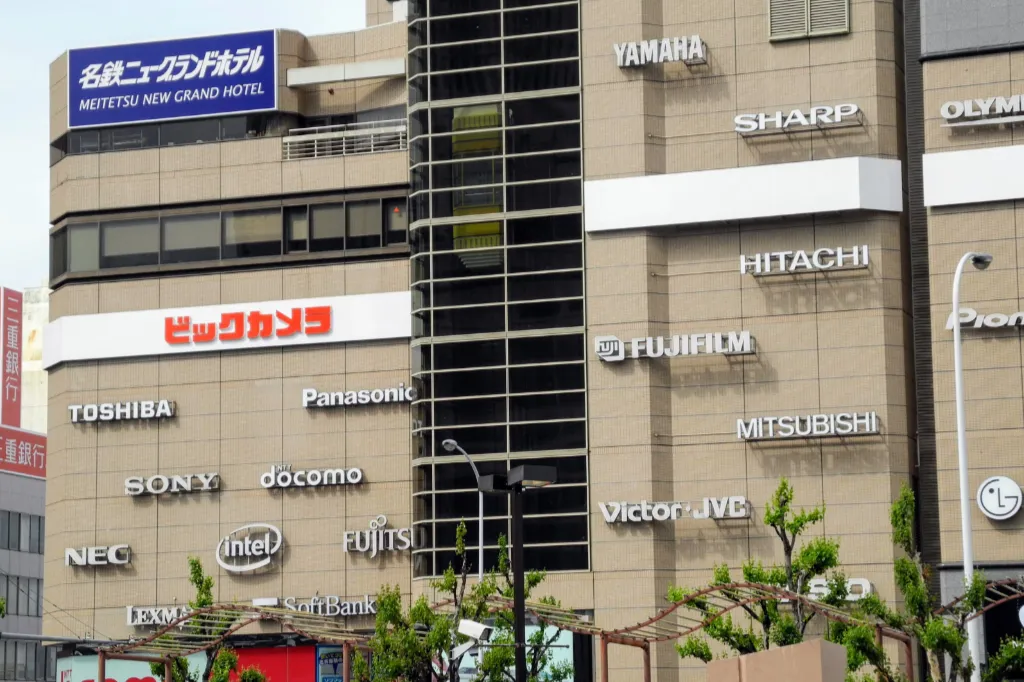
Sony, meanwhile, is still a world leader in the image sensors inside most smartphones, and it’s just announced a major joint venture with TSMC to build the next generation of them, right here in Japan.
Robots, because why not?!
Industrial robots have quietly run Japan’s car and electronics factories for decades, but the country’s fascination goes further – into humanoid robots and machines built to interact naturally with people.
You’ll spot this attitude everywhere once you notice it: a vending machine that talks to you, a hotel front desk staffed by a robot, a restaurant where your order arrives on a gliding robot dressed as a cat in a tuxedo!

Many such experiments go nowhere. A few change everything. Japan just keeps trying, which is probably the real secret to how it’s stayed at the front of the queue for so long.
None of this happened by accident, and none of it happened overnight. It’s what you notice the moment you’re actually here – old-school engineering pride sitting comfortably next to whatever’s newest, because in Japan, that’s just how things are done.
From novelty ideas to genuinely useful
New technology is often treated less like a strange novelty and more like something that can simply be improved until it becomes genuinely useful.
Sometimes those ideas conquer the world. More often they remain unusual experiments.
Japan keeps trying them. The country has a great success rate and this is probably why its reputation for technology has survived for so long, and continues to attract visitors.
About the Author

A writer and publisher from England, Rob has been exploring Japan’s islands since 2000. He specialises in travelling off the beaten track, whether on remote atolls or in the hidden streets of major cities. He’s the founder of the multi-award-winning TheRealJapan.com.
Recommended For You


RESOURCES
Further Related Guides
Connecting Through A Lens: An Interview with Photographer Akiko DuPont
Exploring Tokyo Gaming Culture From Classic Arcades to VR Experiences
How To Pay For Things in Japan
More Experience Resources
My List of Recommended Japan Travel Resources
Recommended Japan Travel Resources
My Japan Travel Store
Feel free to share this guide if you found it helpful: