

Summary
Planning a stress-free Japan trip means strategically using proven apps and resources to handle complex logistics – navigation apps for railways, booking platforms for authentic accommodations, pocket Wi-Fi for connectivity, and translation apps for cultural navigation – so technology runs in the background while you remain free to look up, immerse yourself in The Real Japan, and leave space for spontaneous discovery.
Key Takeaways
- Master Japan’s transport maze with the right apps – While Google Maps is essential, Japan Travel by NAVITIME is invaluable for tourists, pulling data directly from official timetables with precise platform numbers and transfer times to avoid the panic of “wrong platform in Shinjuku” moments.
- Book accommodation smart with local platforms – Beyond international sites like Booking.com, use Jalan – a local platform listing accommodations you won’t find on Western sites.
- Stay connected with pocket Wi-Fi or data SIMs – While Wi-Fi in Japan is improving, it’s still patchy in remote areas; reliable internet through providers like Ninja WiFi or Mobal is non-negotiable for navigation, translation, and finding hidden local spots both inside and outside major cities.
- Navigate language barriers with specialised translation tools – Google Translate is standard, but DeepL sometimes provides more natural translations and the Yomiwa app excels at reading Japanese characters, dramatically lowering the anxiety of communicating and deciphering menus or street signs.
- Find authentic restaurants using local review culture – Skip tourist traps with Tabelog or Gurunavi, where exceptionally honest and detailed Japanese reviewers operate differently – a 3.5-star rating on Tabelog is actually very high, signaling locals love it.
- Let technology support the experience, not replace it – Planning without stress comes down to balance: use apps and resources to handle complex logistics like verifying departures and translating menus, but leave space in your schedule for slow meandering streets, tiny local businesses, and unexpected conversations where Japan’s heart truly reveals itself.
Want more free content like this?
Let’s be honest: planning a trip to Japan can be overwhelming. The language barrier, the complex train networks, the fear of making a cultural slip-up – it’s enough to make even seasoned travellers hesitate.
But here is the good news: that pre-trip stress doesn’t have to define your experience.

By making strategic use of a few proven digital resources, you can craft a calm, measured itinerary. This isn’t about gluing your eyes to a screen; it’s about letting technology handle the logistics so you are free to look up and immerse yourself in the ‘real’ Japan. These tools run in the background, making your frontline experience effortless.
Here is how to use tech to regain control and leave room for the spontaneous.
Mastering the transport maze
Japan’s railway system is legendary for its reliability, but its sheer complexity can catch first-timers off guard. There is nothing quite like the panic of the ‘wrong platform in Shinjuku’ moment.
To avoid this, you need the right navigation apps. Google Maps is really handy for actual map use, but for Japan specifically, Japan Travel by NAVITIME is invaluable. While it’s best known for planning rail travel, if you toggle the ‘Customize Options’ you can use checkboxes for multiple modes of transit including bus, taxi, ferry and even air.

Another good option for planning rail travel is the Japan Transit Planner by Jorudan. Both NAVITIME and Jorudan have app versions (free and paid) for both Android and iOS. These tools pull data directly from official timetables, giving you platform numbers and precise transfer times.
Think of the precision these apps offer as similar to what you get when using any real-time digital platform. Much like how major e-commerce platforms or even online casino sites rely on fast, responsive systems to keep information updated instantly, transport apps in Japan work on that same principle.
The result? No guessing, no lag, and no unnecessary stress.
Booking accommodation the smart way
Whether you are looking for a futuristic capsule pod or a historic, atmospheric ryokan (traditional inn), booking early is key.
While you can use verified international sites such as Booking.com for transparent policies, do not overlook Jalan. Jalan is a local platform that often lists accommodation you won’t find on Western sites, getting you closer to that authentic local experience.
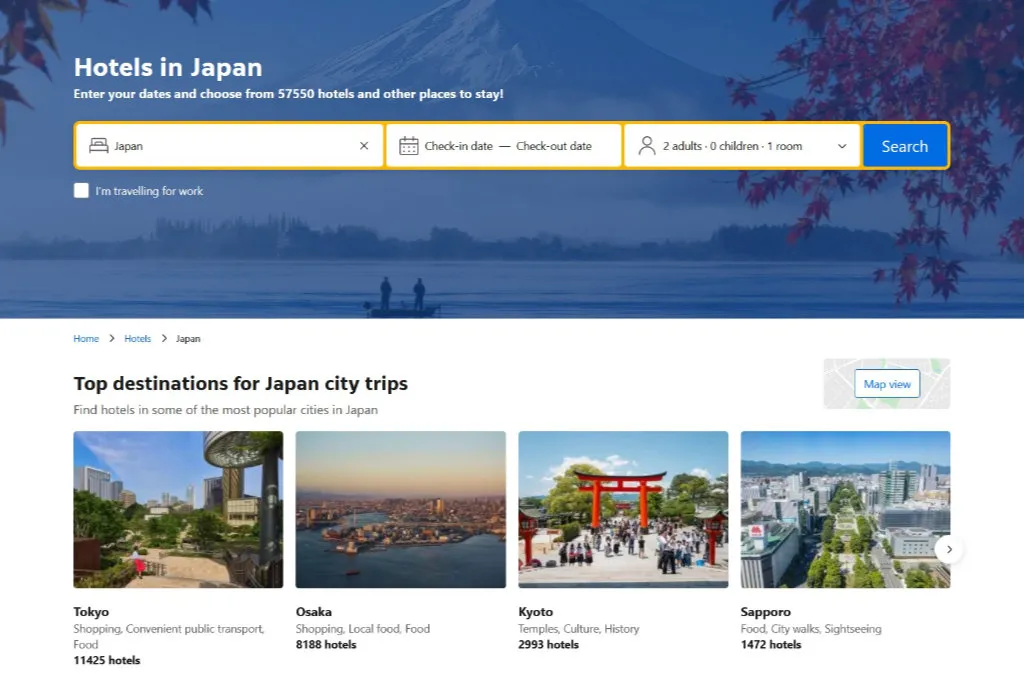
Pro Tip: Sign up for Booking.com’s free Genius loyalty program before you book. Once you complete your first stay, you’ll unlock Genius Level 1, which typically offers 10% discounts on participating properties in Japan, plus perks like free room upgrades, late checkout, and complimentary breakfast at select accommodations. Level 2 (after 5 stays within 2 years) increases discounts to 15%. These benefits can save you hundreds over a multi-week Japan trip, and many ryokan and boutique hotels participate in the program.
Staying connected on your trip
In the past, finding Wi-Fi in Japan was a struggle. While it is improving, it is still patchy in many areas – especially the remote ones we love to explore.
To navigate smoothly, use translation apps, and find those hidden local food spots, reliable internet is non-negotiable. Most savvy travellers either rent a Pocket Wi-Fi or buy a digital eSIM or physical SIM card.

Providers like Ninja WiFi and Mobal allow for easy online reservations. Having this connection is vital if you plan on traveling outside major cities where English signage disappears.
Navigating the language and culture
Beyond transit, having the right cultural tools in your pocket can save you a world of small frustrations.
For deciphering menus or reading street signs, Google Translate is standard, but DeepL often provides more natural translations, and the Yomiwa app is fantastic for reading Japanese characters. They might not be perfect interpreters, but they dramatically lower the anxiety of communicating.

When it comes to food, skip the tourist traps and download Tabelog or Gurunavi. The review culture in Japan is different; reviewers are exceptionally honest and detailed. A 3.5-star rating on Tabelog is actually a very high score – a sign that the locals love it.
Vegetarians and vegans should use the Happy Cow website and app (it has over 5,000 restaurants in Japan). If you want to use an English-language site to find and reserve tables (especially in higher end restaurants) then take a look at the byFood website. They also have food experiences you can book as well.
Letting tech support the experience, not replace it
Planning without stress comes down to striking a balance.
Use these apps and resources to handle the complex logistics – verifying departures, sorting tickets, and translating menus. But never forget where the heart of this country is found: on slow, meandering streets, inside tiny local businesses, and in unexpected conversations.

Let the technology handle the smooth sailing so you can actively choose to go off-script. Japan has a beautiful way of revealing itself to those who leave space in their schedule.
Best Apps For Stress-Free Travel – FAQs Frequently Asked Questions
1. Why is planning a Japan trip so overwhelming?
A: Let’s be honest: the language barrier, complex train networks, and fear of making cultural slip-ups are enough to make even seasoned travelers hesitate. But here’s the good news – that pre-trip stress doesn’t have to define your experience. By making strategic use of proven apps and resources, you can craft a calm, measured itinerary that handles logistics while leaving you free to immerse yourself in the real Japan.
2. What’s the best way to navigate Japan’s railway system?
A: Japan’s railway system is legendary for reliability, but its sheer complexity can catch first-timers off guard. Google Maps is essential, but for Japan specifically, Japan Travel by NAVITIME is invaluable. While veteran site Hyperdia is still accessible via web, modern apps are more user-friendly for tourists. These tools pull data directly from official timetables, giving you platform numbers and precise transfer times – no guessing, no lag, no unnecessary stress.
3. What’s the smart way to book accommodation in Japan?
A: Whether you’re looking for a futuristic capsule pod or a historic ryokan (traditional inn), booking early is key. Use verified international sites like Booking.com and Airbnb for transparent policies, but don’t overlook Jalan – a local platform that often lists accommodations you won’t find on Western sites, getting you closer to authentic local experiences. Pro tip: Use Google Hotels to compare prices across platforms instantly, filtering by budget, neighborhood, or atmosphere.
4. How can I stay connected during my Japan trip?
A: In the past, finding Wi-Fi in Japan was a struggle. While it’s improving, it’s still patchy in many areas – especially the remote ones travelers love to explore. To navigate smoothly, use translation apps, and find hidden local food spots, reliable internet is non-negotiable. Most savvy travelers either rent a pocket Wi-Fi or buy a data SIM from providers like Ninja WiFi, Japan Wireless, or Sakura Mobile, which allow easy online reservations.
5. What are the best translation tools for Japan?
A: Beyond transit logistics, having the right cultural tools in your pocket saves a world of small frustrations. Google Translate is standard, but DeepL often provides more natural translations. For reading Japanese characters – essential for deciphering menus or street signs – Yomiwa is fantastic. They might not be perfect interpreters, but they dramatically lower the anxiety of communicating.
6. How do I find authentic restaurants and avoid tourist traps?
A: Skip the tourist traps and download Tabelog or Gurunavi. The review culture in Japan is different – reviewers are exceptionally honest and detailed. Here’s the key insight: a 3.5-star rating on Tabelog is actually a very high score, a sign that locals love it. Don’t expect inflated ratings like you might see on Western platforms.
7. How do I balance using technology with experiencing authentic Japan?
A: Planning without stress comes down to equilibrium. Use apps and resources to handle the complex logistics – verifying departures, sorting tickets, translating menus. But never forget where the heart of this country is found: on slow, meandering streets, inside tiny local businesses, and in unexpected conversations. Let technology handle the smooth sailing so you can actively choose to go off-script.
8. Won’t using all these apps make me miss the ‘real’ Japan?
A: Not at all. This isn’t about gluing your eyes to a screen; it’s about letting technology handle the logistics so you’re free to look up and immerse yourself. These tools run in the background, making your frontline experience effortless. The goal is using tech to support the experience, not replace it.
About the Author

A writer and publisher from England, Rob has been exploring Japan’s islands since 2000. He specialises in travelling off the beaten track, whether on remote atolls or in the hidden streets of major cities. He’s the founder of the multi-award-winning TheRealJapan.com.
Recommended For You


RESOURCES
Further Related Guides
5 Travel Essentials You Need BEFORE Coming To Japan
38 Japan Travel Sites and Resources Every Traveller Should Know
Essential Japan Travel Tips for First Time Visitors
Recommended Japan Travel Resources
More Planning Resources
My List of Recommended Japan Travel Resources
Recommended Japan Travel Resources
My Japan Travel Store
Feel free to share this guide if you found it helpful:
